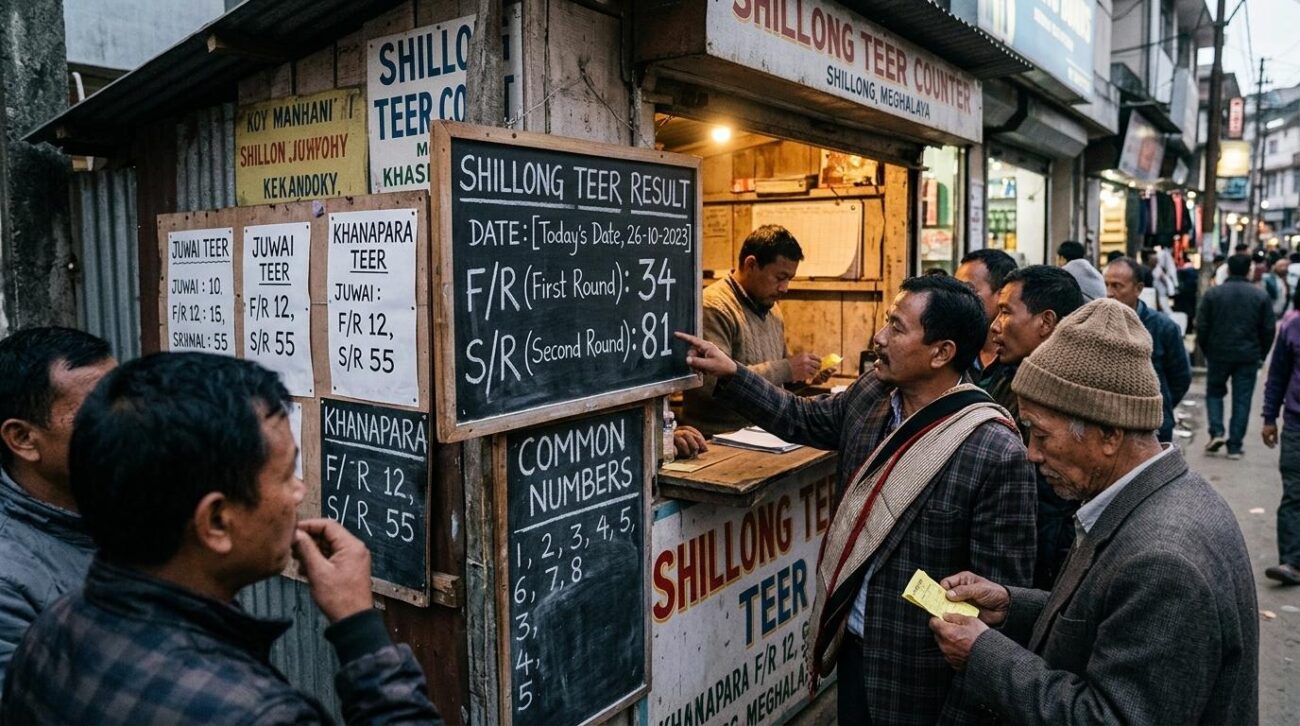
In the scenic hills of Meghalaya, traditional archery meets numerical prediction in one of Northeast India’s most captivating legal traditions: Shillong Teer. Organized by the Khasi Hills Archery Sports Association, this daily archery-based lottery attracts thousands of enthusiasts across the region who closely follow each round to check the winning numbers. Combining cultural heritage, sportsmanship, and strategy, the game has established itself as an integral part of local daily life.
What is Shillong Teer?
Shillong Teer is a legal, regulated archery game governed under the Meghalaya Amusement and Betting Tax Act. Unlike conventional state lotteries that rely on randomized digital draws or mechanical machines, Shillong Teer derives its outcomes from real-world human skill.
Every afternoon—excluding Sundays and declared state holidays—50 skilled archers gather at the Polo Ground in Shillong. These archers belong to various traditional clubs affiliated with the local archery association. Armed with traditional bamboo bows and arrows, they shoot at a straw target within a fixed time frame. The final outcome is determined entirely by counting the arrows that hit the target successfully.
How the Game Works: Mechanics and Timings
The game takes place in two distinct rounds each afternoon. Understanding the structure helps beginners grasp how the winning numbers are calculated:
1. First Round (FR)
- Time: Starts around 3:30 PM, with results typically declared by 3:45 PM.
- Rule: 50 archers shoot a total of 30 arrows each into the circular target within 5 minutes.
- Calculation: Once shooting concludes, officials collect and count all arrows lodged in the target. The last two digits of the total arrow count determine the official First Round winning number. For instance, if 1,247 arrows hit the target, the winning number is 47.
2. Second Round (SR)
- Time: Starts around 4:15 PM, with results declared by 4:40 PM.
- Rule: The same 50 archers shoot again, but this time they release 20 arrows each.
- Calculation: The total number of successful hits is counted in the same manner. If 834 arrows land in the target, the Second Round winning number becomes 34.
Staying Updated with Daily Draws
Because participants actively follow trends across multiple regional draws, getting timely and accurate updates is essential. Players regularly track the shillong teer result right after each round closes to compare official declarations with their daily predictions.
In addition to the main Shillong rounds, several neighboring draws take place throughout the day across the region, including:
- Khanapara Teer: Played near the Assam-Meghalaya border with slightly offset draw times.
- Juwai Teer & Jowai Ladrymbai: Regional variants based in the Jaintia Hills.
- Night Teer: Evening draws catered toward late-day participants.
Many fans also watch real-time video streams of the archers in action at the Polo Ground, enjoying the tension as hundreds of arrows pepper the target before officials begin the public count.
Understanding Charts, Common Numbers, and Targets
Frequent players often look beyond simple guesswork by maintaining detailed historical records and analyzing numerical patterns. Some popular techniques include:
- Teer Charts: Archival tables displaying past First Round and Second Round numbers over weeks or months. Enthusiasts analyze recurring digit combinations or trends based on day-of-the-week performance.
- House and Ending Numbers: Predictions categorized by the “tens” digit (House) or “units” digit (Ending). For example, a target with a House of 4 covers numbers 40 through 49.
- Dream Analysis: A traditional cultural element where participants interpret specific imagery from night dreams into corresponding numbers according to localized folklore.
While these historical charts and target estimations add a strategic layer of engagement, every draw remains an independent sporting event determined solely by the archers’ precision on that given day.
Cultural and Economic Impact
Far from being just a game of chance, Shillong Teer plays a substantial role in the socio-economic structure of Meghalaya. It provides employment to thousands of official ticket counter operators, archers, and administrative staff across the state. Furthermore, licensing fees and amusement taxes generated from the game contribute directly to state revenue and local sports development funds.
The game also preserves the centuries-old Khasi tradition of archery (Khnang), keeping traditional bow-making and archery techniques alive among younger generations.
Conclusion
Shillong Teer remains one of Northeastern India’s most intriguing cultural practices, seamlessly blending athletic tradition with numerical prediction. Whether observing the disciplined archers at the Polo Ground or tracking the afternoon outcomes online, the game offers a window into the rich heritage and community spirit of Meghalaya. For anyone interested in unique traditional sports, understanding how Shillong Teer operates reveals a system built on heritage, transparency, and human skill.
