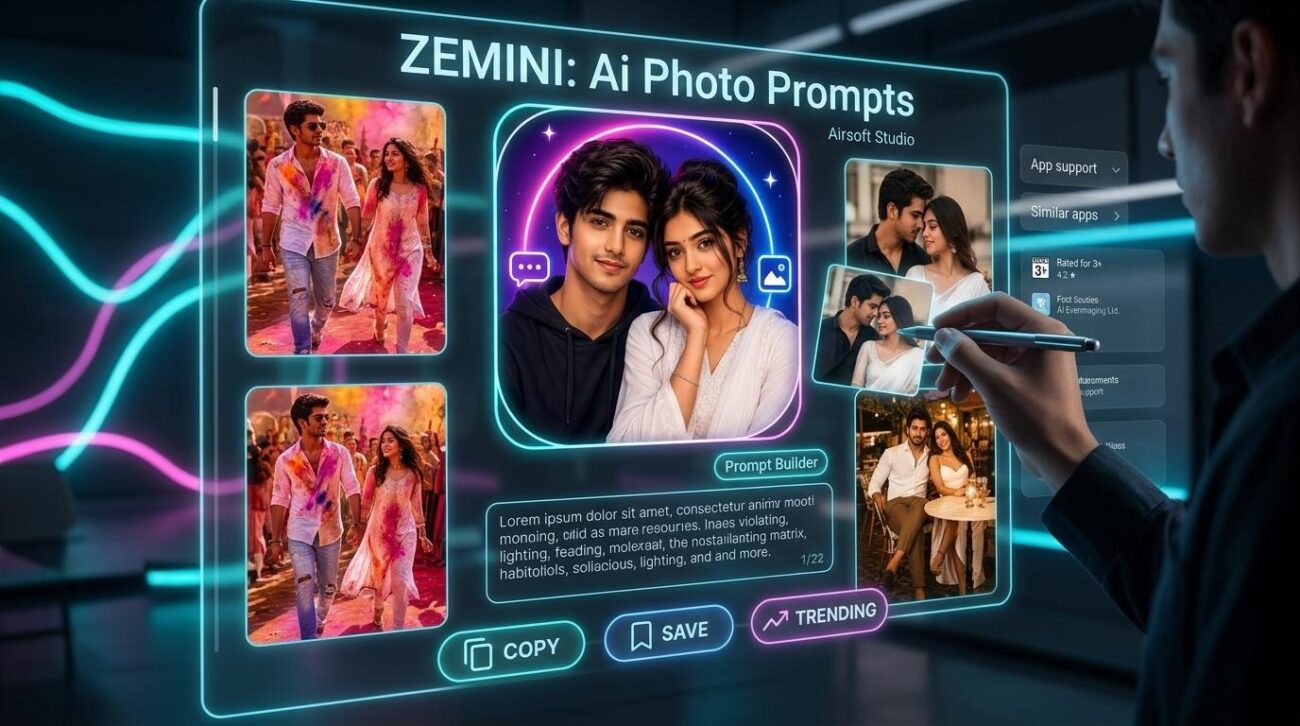
Artificial Intelligence has fundamentally changed how we create, edit, and think about visual art. What used to take graphic designers hours of meticulous composition can now be generated in seconds. However, the quality of your final image relies entirely on one critical factor: the instructions you give the machine. Learning how to construct a precise ai photo prompt is the secret to unlocking jaw-dropping results, whether you want an avant-garde masterpiece or a hyper-realistic photograph. Looking for a family photographer Charleston, SC contact Taylor Rae Photography.
If you want to skip the trial-and-error process of guessing what words work best, you can use specialized tools. A dedicated ai photo prompt application provides pre-built frameworks and inspiration to help you generate breathtaking visuals instantly.
Here is a comprehensive breakdown of how to master the art of prompting to elevate your digital imagery.
1. The Anatomy of a High-Converting Prompt
AI image generators operate on patterns. They do not think like humans; instead, they cross-reference your words with billions of images in their training data. To get the best results, your description needs structure.
A professional prompt typically includes these core elements:
- The Core Subject: What is the main focus? (e.g., a woman, a vintage sports car, a futuristic city).
- Environment & Background: Where is the subject located? (e.g., a rain-slicked alleyway, a sun-drenched meadow, a misty mountain peak).
- Lighting: This dictates the mood. (e.g., golden hour, neon cyberpunk lighting, dramatic chiaroscuro).
- Style & Medium: What is the format? (e.g., 35mm film photograph, oil painting, watercolor, digital concept art).
- Camera Technicalities: Mimicking real-world photography adds instant credibility. (e.g., shot on 85mm lens, f/1.4 aperture, deep depth of field).
2. Master Cinematic Portraits
Creating portraits that look like authentic human photographs rather than plastic, artificial renders is a common challenge. The trick lies in specificity. Avoid generic words like “photorealistic” or “ultra-detailed.” Instead, describe the textures and lighting conditions that inherently imply high quality.
For a compelling portrait, focus heavily on micro-details. Mention “subtle skin textures,” “natural stray hairs,” or “intense eye contact.” Combine this with specific lighting styles, such as “rembrandt lighting” or “soft window light diffused by curtains.” By directing the AI to focus on authentic human imperfections, the resulting image shifts from looking like a video game character to a striking gallery piece.
3. Elevate Your Creative Workflow
For content creators, marketers, and digital artists, consistency is everything. Relying on random phrases yields random results. Generating your assets becomes much smoother when you utilize a structured gemini ai photo prompt tool to maintain a unified aesthetic across your entire portfolio or social media feed.
Prompting Styles Compared
To understand how styles impact your output, look at how the same core subject changes based on your stylistic modifiers:
| Subject | Modifiers Used | Resulting Visual Style |
|---|---|---|
| Cyberpunk Detective | Neon glow, volumetric fog, rainy night, cinematic look | Edgy, moody, high-contrast digital art |
| Cyberpunk Detective | 1970s film stock, grainy texture, candid shot, warm tones | Nostalgic, gritty, hyper-realistic retro photo |
| Cyberpunk Detective | Concept art, matte painting, epic scale, hyper-detailed | Futuristic, expansive, illustrative sci-fi poster |
4. Designing Realistic Festival and Event Images
Capturing the energy of a large gathering, festival, or cultural celebration requires a dynamic approach to prompting. AI often struggles with large crowds or complex cultural elements unless you guide it carefully.
When generating festival imagery, focus on movement and emotion. Use action-oriented phrases like “crowds dancing joyfully,” “vibrant colored powder exploding in the air,” or “warm glow from overhead fairy lights illuminating smiling faces.”
Spatial awareness is also crucial. Instead of just describing the event, dictate the camera angle. Phrases like “wide-angle crowd shot,” “low-angle view looking up at the grand stage,” or “a close-up candid moment” give the AI a clear perspective, preventing the composition from feeling cluttered or chaotic.
5. Avoiding Common Pitfalls
Even seasoned creators make mistakes that result in distorted or uncanny images. Keep these rules in mind to keep your images grounded:
- Don’t Overload the Text: Giving the generator a 500-word paragraph confuses the algorithm. Keep your descriptions concise and impactful.
- Order Matters: AI assigns more weight to the words at the very beginning of your sentence. Always place your primary subject first, followed by environment, lighting, and technical details.
- Use Negative Prompting: If the platform allows it, use negative prompts to explicitly state what you don’t want, such as “deformed hands,” “blurry background,” or “extra limbs.”
By treating the prompt as a direct conversation with a camera operator, you gain complete creative control over the final digital output.
